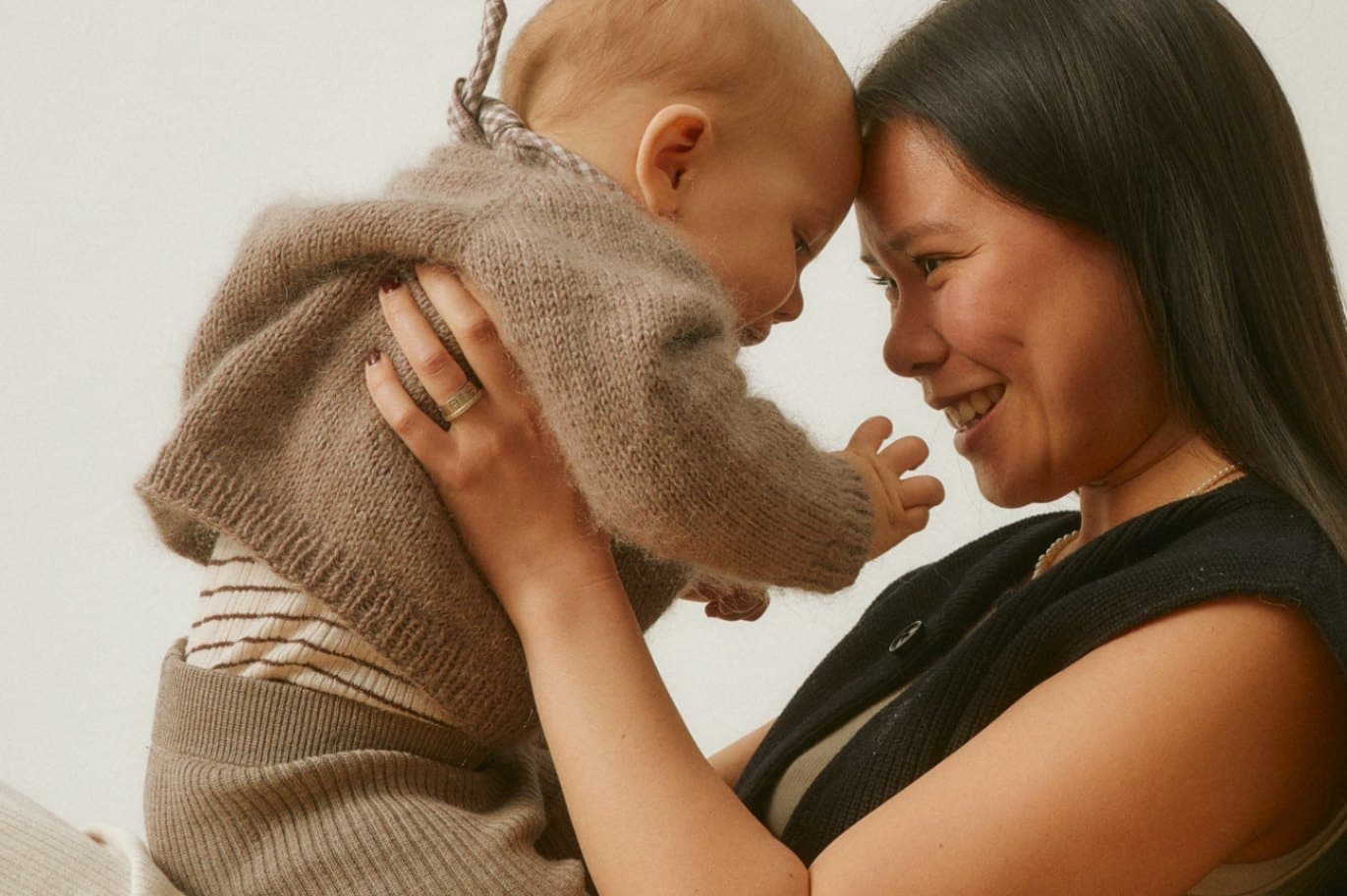
Most babies are born ready to connect. They are wired to seek out faces, respond to voices, and engage in back-and-forth interactions that build the foundation for all future relationships. When those early connection patterns look different, it is often the first sign that a baby’s brain is developing along a different path.
No single sign on this list is a diagnosis. Many of these behaviors appear in typically developing babies at various stages. What matters is consistent patterns across multiple areas, across different situations and times of day. This article is meant to inform, not alarm. If something concerns you, the right step is always a conversation with your pediatrician — and the earlier the better.
Sign 01
Limited Eye Contact
Most babies naturally seek out faces and eyes because they are wired to connect that way from birth. But some babies consistently look past you, around you, or seem more interested in the pattern on the wall than the person holding them. This is not about shyness or drowsiness — it is about how the brain is processing social information.
Eye contact is one of the earliest ways babies learn to connect. For babies on the autism spectrum, the brain’s social reward system — the part that makes eye contact feel important and meaningful — may not be firing in the same way. Making that eye connection can feel overwhelming, or simply may not register as significant.
Notice patterns without panicking. If your baby rarely makes eye contact during feeding, play, or cuddle time across different situations and times of day, track it. Try gentle games like peekaboo or holding toys near your face to encourage looking — but never force it. If this is a consistent pattern alongside other signs, bring it up with your pediatrician early.
Sign 02
Minimal Response to Their Own Name
You call your baby’s name from across the room and they don’t turn, don’t pause, don’t show any sign they heard you. But crinkle a wrapper or play music and they respond immediately. The issue is not hearing — it is that their name, which should be one of the most important sounds they recognize, doesn’t yet register as meaningful.
For typically developing babies, their name becomes special early because it is paired with connection and care. For babies on the autism spectrum, the social significance of language may not develop on the same timeline. The baby hears the sound — but it does not carry the meaning of someone wants to connect with me that it does for other babies.
Test it thoughtfully across different situations — during play, when calm and alert, when focused on something. If they consistently don’t respond to their name but react well to other sounds, note that pattern. This is not about one missed response. It is about whether it is happening most of the time. Early speech and social interventions work best when they start young.
“What looks like contentment or independence can sometimes be a quieter form of disconnection — and recognizing the difference early changes everything.”
Sign 03
Limited Smiling or Social Engagement
Most babies are social creatures from the very start — they smile when you smile, light up at funny faces, laugh at silly sounds. But some babies seem to exist in their own space, rarely smiling back even when you are doing everything to connect with them. They may be content, but they are not inviting you into their joy or responding to your attempts to share moments together.
This is about social reciprocity — the back-and-forth quality of shared interaction. A baby can be happy and engaged with the world while still not showing that mutual delight that typically builds between parent and child. The difference is not happiness; it is whether they are dancing with you, or dancing beautifully — alone.
Pay attention to whether your attempts to connect feel back-and-forth or one-sided. Try singing, gentle games, and exaggerated expressions. If social engagement consistently remains limited — and if the signs labeled “just serious” or “just independent” keep stacking up — do not dismiss them. These are often the earliest signals of a difference in social development.
Sign 04
Delayed Babbling or Vocalization
By 6 months, most babies are babbling with varied sounds, practicing the rhythms and patterns of speech even though no real words exist yet. Some babies are remarkably quiet — producing far fewer sounds than expected, making noise mainly when upset but not during that playful exploratory babbling that typically develops naturally.
Babbling is practice — the linguistic equivalent of scales before playing a song. When it is limited or absent, it can signal that the natural drive to use sounds to connect is developing differently. This is not about whether a child will ever talk. Many children with autism do develop speech. It is about recognizing when the foundation for communication is following a different path.
Listen for the variety and frequency of sounds — not just crying, but playful vocalizations during calm moments. If your baby is quiet most of the time beyond crying, mention this to your pediatrician. Early speech therapy can support language development even before words arrive, helping to build that communication foundation from the ground up.
Sign 05
Repetitive Movements
Hand-flapping when excited. Rocking rhythmically. Spinning objects repeatedly rather than playing with them in varied ways. These repetitive movements — often called stimming — are among the more recognizable early signs of autism. They are not random, and they are not difficult behavior. They are the nervous system seeking regulation through predictable, repetitive input.
For many babies on the spectrum, the world feels overwhelming or confusing — and these movements provide a sense of control and calm. Think of how a stressed adult taps a pen or bounces a leg. For these babies, the same principle applies but more intensely, because their sensory systems are processing the world differently.
Rather than immediately trying to stop these movements, observe when they happen — during overwhelm, excitement, tiredness, or boredom. Understanding the pattern helps you understand what your baby might need. If the movements are frequent, intense, and interfering with other activities like eating or play, discuss it with your doctor.
Sign 06
Intense Focus on Objects Over People
Some babies become captivated by objects in ways that seem unusual — watching a fan spin for 20 minutes without losing interest, staring at light patterns on the wall, lining up toys in perfect rows rather than playing with them. This intense, narrow focus on objects rather than people is another early signal that the social brain may be developing differently.
Typically, babies are drawn to faces and social interaction more than anything else. But for babies on the autism spectrum, objects may feel more interesting and manageable than the complex, ever-changing world of human interaction. A spinning fan does the same thing every time. People do not — and that unpredictability can be hard to process.
Notice what captures their attention and for how long. Do they look to share discoveries with you, or are they content to explore alone? If your baby consistently prefers objects to people and can focus on visual or mechanical patterns far longer than on your face, that pattern is worth discussing with your pediatrician.
Sign 07
Unusual Response to Sensory Input
Some babies are overwhelmed by sensory experiences that others handle easily — screaming at certain sounds, refusing specific clothing textures, becoming distressed by normal household lights. Others show the opposite: they seem oddly indifferent, not startling at loud noises, not crying when they fall and scrape a knee, not noticing extreme temperatures. Both extremes matter.
Think of sensory processing as having volume controls for every type of input. For many people with autism, some controls are turned far up — everything feels too intense — while others are turned far down, barely registering important sensations. Neither response is manipulation or behavioral difficulty. It is the nervous system receiving genuinely different information about the world.
Notice your baby’s reactions to different sensory experiences. Do they react extremely to things other babies tolerate easily — or barely react to things that should hurt or startle? If either pattern is consistent and interfering with daily routines like dressing, eating, or sleeping, talk to your pediatrician. Occupational therapy can help babies learn to process sensory input more effectively.
Sign 08
Difficulty with Transitions
Even small changes in routine can send some babies into complete distress — switching activities, going to a new place, having a different caregiver. Where most babies adapt relatively quickly, babies on the autism spectrum often rely heavily on predictability to feel safe. When routines shift, even slightly, it can trigger intense anxiety that seems far out of proportion to what actually changed.
For these babies, routines are not mere preferences — they are the structure that makes a confusing world feel manageable. When that structure breaks, even in small ways, it feels like chaos. What looks like stubbornness or inflexibility is genuine distress from a brain that depends on knowing what comes next.
Honor routines where you can. When changes are necessary, prepare your baby as much as possible — use consistent words and actions to signal transitions, give warnings before changes when age-appropriate. When meltdowns happen over transitions, respond with calm comfort rather than frustration. Flexibility is a skill that develops slowly for some children and needs patient, steady support.
Sign 09
Limited Use of Gestures
By 9 to 12 months, most babies are pointing at interesting things, waving hello and goodbye, reaching up to be held, and clapping when excited. These gestures are early forms of communication that lay the foundation for language. Babies who later receive autism diagnoses often don’t develop these gestures on the typical timeline — they may get needs met by pulling your hand or crying, but they don’t point to share interest or wave to connect.
Gestures are the bridge between experiencing the world and sharing that experience with others. Pointing at a bird is not just about the bird — it is about saying look at that, I want to share this with you. When that drive to share experiences through gestures is missing or delayed, it signals that the social communication system is not developing along the usual path.
Model gestures during play and daily routines — wave bye-bye, point at interesting things while looking between the object and your baby’s face, clap for celebrations. Don’t force imitation; create opportunities. If by 12 to 15 months your baby isn’t using any communicative gestures, raise this with your pediatrician. Early communication interventions can teach these foundational skills effectively.
Sign 10
Delayed Motor Coordination
While autism is primarily about social communication and sensory processing, many babies on the spectrum also show delays in motor skills — slower to roll over, sit up, crawl, or grasp objects compared to their peers. This is not true for every child with autism, but it is common enough that motor delays alongside social differences can create a clearer overall picture.
The same neurological differences that affect social processing can also affect how the brain plans and coordinates movement. When development follows an atypical path in one area, it often influences others. A baby who isn’t engaging socially may also be behind on physical milestones — not because they are incapable, but because their brain is prioritizing and processing development differently.
Track all areas of development, not just social ones. If your baby is showing several of the signs described in this post and is also behind on motor milestones, that combination provides important information. Early physical therapy and occupational therapy can support motor development while other interventions address communication and social skills. Don’t wait and hope they catch up — earlier support always produces better outcomes.
Quick Reference: 10 Signs to Watch For
Note patterns across multiple signs and situations — not isolated moments
Early awareness changes outcomes.
No parent should read this list and panic. But no parent should read it and wait either.
The signs described here are not a diagnosis. They are a language — your baby’s nervous system communicating something worth understanding. And the earlier that understanding begins, the more effective any support can be.
If something in this list sits with you, trust that feeling. Write down what you are noticing. Bring it to your pediatrician. Ask for an evaluation. You are not overreacting. You are paying attention — and that is exactly what your child needs most.