Protective conversations that could change your child’s life—delivered with love, not fear.
Your child is somewhere between five and ten years old right now. They are curious, social, and starting to spend more time with friends, more time at school, more time in spaces where you cannot always see them. That is beautiful—that is growing up. But it also means this is exactly the right moment to have conversations that most parents keep putting off. Not because these conversations are easy, but because the world does not wait until anyone is ready.
Today, we want to help you talk with your child about four situations that might look innocent on the surface but carry real risks. These are not conversations meant to instill fear. They are conversations meant to build awareness, confidence, and trust. Your child needs to hear from you—not because you doubt their judgment, but because they are counting on you to be their guide.
The Game of Pretending to Sleep Outside
You have probably seen it. Children lying on the grass, closing their eyes, pretending to nap—maybe as part of a game, maybe on a dare, maybe just because a friend thought it was funny. It looks harmless. Children at play, using their imagination, creating scenarios.
But here is what your child does not yet understand. When their eyes are closed and their body is still, they look completely unprotected. In public spaces, that vulnerability matters more than most children realize. The American Society for the Positive Care of Children reminds us that young children are not developmentally equipped to recognize unsafe situations. They trust the world the way children are supposed to—openly, freely, without suspicion. That is not a flaw. That is childhood. But it means the job of recognizing danger and responding to it belongs to adults.
When a child is pretending to be asleep outside, there is no adult eye on them, and they cannot protect themselves. They do not know to look for someone who might approach with wrong intentions. They are practicing vulnerability in a public space without understanding the consequences that vulnerability could invite.
The solution is not to frighten your child but to teach them wisdom. Tell them gently: “Sleeping is something we do at home, or at school during rest time—places where someone who loves you is always nearby. Outside, we stay awake and aware. That is not fear. That is wisdom.” Help them understand that being alert in public is simply part of taking care of themselves, not a sign that the world is dangerous. When children understand the why behind a rule, they are far more likely to follow it naturally.
The Conversation About Body Safety
This one is harder to say out loud. But saying it is exactly what protects your child, and it needs to happen long before anyone else might try to have this conversation with them first.
Research from Rady Children’s Hospital tells us that one in three girls and one in twenty boys will experience some form of unwanted sexual contact before they turn eighteen. One in three. Let that number settle for a moment. Now consider that most of those children never told anyone, because no one had ever given them the words or the permission to speak. They did not tell because they did not know how. They did not tell because they were confused. They did not tell because they were afraid of getting in trouble or being disbelieved.
The “Touching Game” is the name many child safety experts give to the moment someone—a peer, an older child, or an adult—makes touching feel like play. Like a secret. Like something normal. These predators understand that children are trusting, that they want to please adults, and that they can be manipulated through confusion and shame.
Your child needs to hear, clearly and calmly, from you: “No one should touch the parts of your body that your swimsuit or underwear covers. Not a friend, not an older kid, not a grownup. The only people who can help you wash or get dressed are Mom and Dad—and even then, we respect your body.” The YMCA’s body safety framework calls this teaching body autonomy, and children who understand it are statistically more likely to speak up if something ever happens. They are more likely to come to you, because you made it safe to talk about.
You do not need to frighten them with graphic descriptions or worst-case scenarios. You just need to name it simply and matter-of-factly. Children can only protect what they have been taught to name, and they need to hear from you that their body belongs to them. They have the right to say no, even to adults, even to people they love, even in situations that feel confusing. And they need to know that if anything ever makes them uncomfortable, they can tell you and you will believe them.
The Bravery Challenge and Peer Pressure Dares
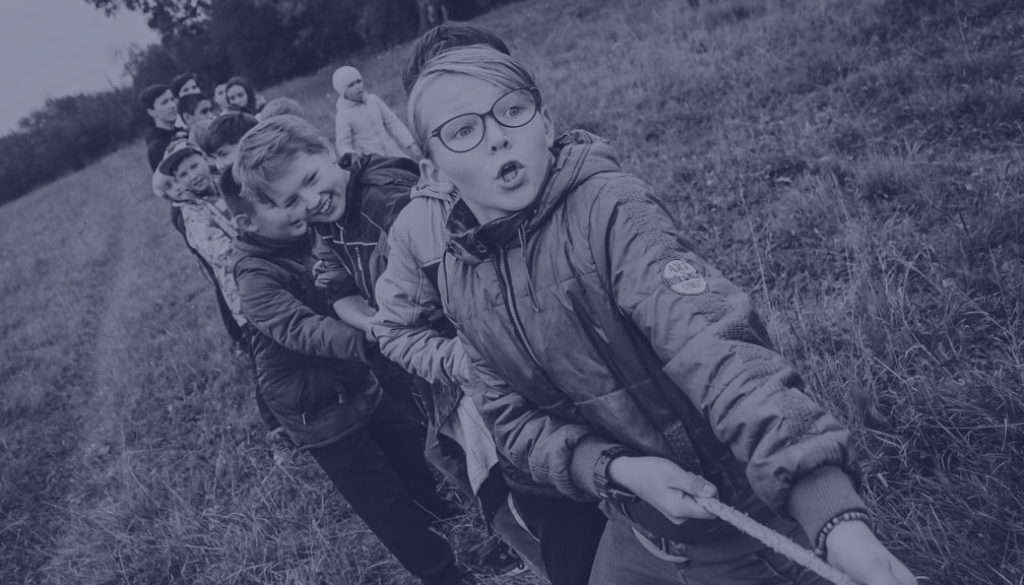
Picture this scenario, and perhaps you have already seen a version of it. A group of children stands near a wall, a fence, or a staircase. One child turns to another and says, “I dare you. Climb up there and jump. Do it if you are brave.”
And the child—your child—feels something shift inside them. They want to belong. They do not want to be called scared. Because at seven or eight, or nine years old, the opinion of peers can feel like the most important thing in the world. The need for social acceptance is biologically hardwired, and children have not yet developed the emotional maturity to weigh that need against personal safety.
A peer-reviewed study published in the American Journal of Public Health followed over 700 children between grades five and eight and found that nearly half of all peer dares put children at risk for physical injury. Half. And the pressure only grows stronger as children get older and more socially aware. The children issuing dares often do not think about consequences. They are focused on entertainment, on testing boundaries, on the momentary thrill of watching someone else take a risk.
There is a real-world story that circulates in child safety circles—a nine-year-old boy who broke his arm jumping from a playground structure on a dare. When asked why he did it, he said, “I did not want them to think I was a baby.” He was in a cast for six weeks. The friends who dared him had forgotten about it by the following Monday. The consequences lasted far longer than the social moment.
What you want to teach your child is not to avoid all risks or never play with friends. You want to teach them the truth about real bravery. Say this to them, not as a rule but as a principle they can carry: “Being brave does not mean doing something dangerous to prove yourself to someone else. Real bravery is saying no when everyone around you is saying yes. Real bravery is walking away.”
Let them know repeatedly that their worth is not measured by what they are willing to risk for someone else’s approval. They do not owe anyone proof of their courage. Their value as a person is fixed and unconditional, and no dare can change that. When children truly internalize this message, they become resistant to one of the most dangerous forms of peer pressure—the kind that masquerades as a test of friendship or loyalty.
The Secret Game and Recognizing Grooming
Now we arrive at the conversation that child protection experts say is perhaps the most important and the most frequently avoided. This is about recognizing manipulation tactics before they can take hold.
It starts with a whisper. Someone—an adult, an older child, even a peer—leans close and says, “Do not tell your parents about this, okay? It is our secret.” And just like that, a wall begins to build between your child and you.
The Center for Child Protection identifies secret-keeping as one of the most recognizable early signs of grooming. Psychology Today’s research on child abuse prevention is equally clear: asking a child to keep a secret from their parents is not innocent behavior. It is a documented manipulation tactic used to isolate children from their primary source of safety—which is you. Predators understand that children who feel connected to their parents are harder to manipulate. So they work to create distance, confusion, and loyalty to themselves instead.
Not every secret is sinister, of course. Surprise birthday parties are secrets. A gift wrapped in a closet is a secret. A hidden plan for a family trip is a secret. But your child needs to understand the critical difference between a surprise—which has an end date, which makes someone happy, which everyone will know about soon—and a secret that makes them feel uneasy, confused, or afraid to tell you.
Tell them this clearly and often: “In our family, we do not keep secrets from each other. If anyone—anyone at all—asks you to keep something secret from Mom or Dad, that is the moment you come straight to me. You will never be in trouble for telling me. Never.” This message needs to be repeated, because children who are being manipulated will be told that their parents will be angry, that it was their fault, that no one will believe them. You need to preempt those lies with your own consistent message of safety and belief.
And then—this part is just as important—when your child does come to you with something, stop what you are doing. Put down your phone. Look them in the eye. Listen like what they are saying is the most important thing you will hear all day. Because it might be. The moment a child decides to tell an adult about something confusing or frightening is a moment that requires courage. Honor that courage by responding in a way that makes them feel heard, believed, and protected.
Addressing Parental Concerns
Conversations like these can feel heavy. You might worry that talking about danger will steal your child’s innocence, or that naming these things will plant fear where there was none before. These concerns come from a good place—from love. You want your child’s childhood to remain magical and safe.
But here is what research and experience both teach us. Children are not protected by silence. They are protected by knowledge, by trust, and by knowing that no matter what happens, you are a safe place to land. Children who have had age-appropriate safety conversations with their parents are no less happy than other children. But they are measurably safer. They know what to call things. They know what to expect. They know where to go when something feels wrong.
You do not have to deliver all four of these lessons in one sitting. You do not have to be perfect or have the exact right words. You just have to start. On a car ride. At dinner. Before bed. One conversation at a time, in your own words, in your own style. The goal is not to raise a fearful child who sees danger everywhere. The goal is to raise a child who knows their own worth, trusts their own instincts, and knows without a single doubt that they can always, always come to you.
Making Your Home a Safe Harbor
Share these lessons with your children not in a way that frightens them but in a way that empowers them. Tell them that pretending to be asleep in public is not safe, because they deserve to be watched over. Tell them their body belongs to them and only them. Tell them that real courage looks like saying no. And tell them clearly, tell them often, that there are no secrets in your family that are more important than their safety.
The world is mostly good, but it is not entirely safe, and children who know what to watch for and where to turn are better equipped to navigate it. Your child needs to know that you are not naive, that you understand there are risks, and that you have given them the tools to protect themselves. This does not take away their childhood. It gives them the freedom to enjoy it, knowing they have someone in their corner.
Nothing in this world is more precious than a child who feels safe, seen, and unconditionally loved. Everything you do to prepare them—every conversation, every moment of connection, every time you make yourself available to listen—builds that foundation of safety that will carry them through childhood and beyond.