It’s 2am. You haven’t slept more than three hours straight in weeks. Your baby cries. You drag yourself up, pick them up, hold them close, whisper something — maybe their name, maybe nothing that makes sense — and slowly, they settle.
They look up at you.
And right there — in that half-asleep, unwashed, barely-functioning moment — something extraordinary is happening inside your baby’s brain. Most parents have absolutely no idea.
These are not grand parenting strategies. They are things you are probably already doing — ordinary moments that most parents never think twice about. Here is what is actually happening inside your baby’s brain each time.
Harvard’s Center on the Developing Child calls it serve and return. Every time your baby reaches out — a cry, a coo, a smile, a reach — and you respond, a neural connection forms in their brain. Literally. A new wire gets laid. And those wires become the foundation for their emotional health, their ability to learn, and their future relationships. Miss those moments consistently, and their stress system activates instead — flooding that tiny developing brain with cortisol.
So these seven things are not just sweet parenting moments. They are brain-building. Starting right now.
01
Responding to Their Cries
Too many parents carry guilt they do not deserve about this one. Let’s put it to rest. You cannot spoil a newborn.
Someone has probably told you otherwise — a well-meaning grandparent, a neighbor, maybe a voice in your own head at 3am: “If you pick them up every time, you’ll create a bad habit.” Every single response you give is answering a question your baby’s nervous system is asking: Is someone there? Am I safe? Can I trust this world?
Research on secure attachment shows that babies who receive consistent, responsive care grow into children who are actually more independent, more resilient, and more confident — not less. Responding does not teach dependence. It teaches safety.
Pick them up. Every time you can. You are not being soft. You are being their foundation.
02
Making Eye Contact
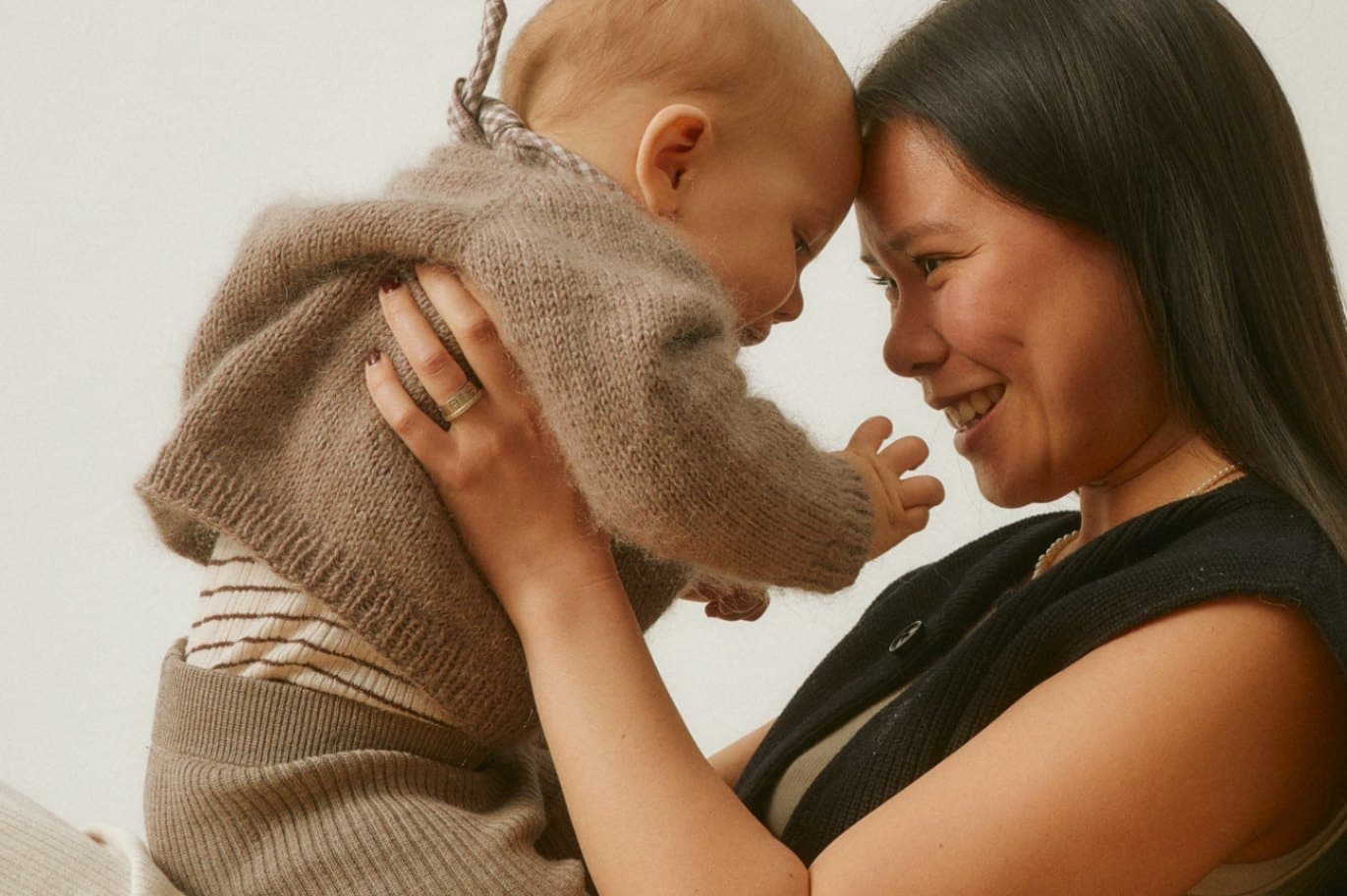
This one costs you nothing — not money, not time, not even energy you don’t have. Just look at them.
When your baby catches your gaze and you hold it — even for a few seconds — specific regions of their brain associated with social learning, trust, and emotional bonding activate. Your face is the first mirror they have ever had. They are learning what safety looks like. What warmth looks like. What love looks like. All from your eyes.
You do not need to perform or entertain. Simply meeting their gaze with warmth is one of the most neurologically significant things you can do. Let your face be present.
“Your baby is not a passive observer in your life. They are an active participant in their own development — and they are reading every page of your face.”
03
Talking to Them
Yes, even when they stare back at you like you’ve lost your mind. Babies begin learning language from birth — not words, but the rhythm, tone, and warmth of your voice.
Researchers have found that infants can recognize their mother’s voice within hours of being born. By 9 to 12 months, a baby’s brain has already begun pruning away the ability to distinguish sounds in languages they have never heard — it is focusing on yours. MIT and University of Texas researchers used brain scans to prove that the number of back-and-forth conversational turns between caregiver and baby directly shapes how the brain’s language regions develop. Not just words heard — the back-and-forth exchange.
Parents naturally do something researchers call parentese — that higher-pitched, musical, slower way of talking. It sounds silly. It is one of the most effective things you can do for language development.
Narrate the diaper change. Talk through the grocery run. Sing something embarrassing. Every word — every response to their coo — is a wire being laid in their developing brain.
04
Holding and Cuddling Them
Touch is a language. And for a baby, it may be the most fluent one.
When you hold, cuddle, or carry your baby close, both of your bodies release oxytocin — the hormone tied to love, bonding, and calm. Research on affectionate caregiver touch shows that consistent physical contact regulates a baby’s stress response, strengthens their immune system, and supports healthy brain development. Studies on skin-to-skin care have produced measurable improvements in heart rate stability, temperature regulation, and emotional bonding — not just for the baby, but for the parent too.
You don’t need a technique. You don’t need to do it perfectly. You just need to hold them — a lot.
05
Smiling and Showing Emotion
From the very first weeks of life, your baby is studying your expressions — not passively, but actively. They are building their entire emotional vocabulary from watching your face.
When you smile, they learn what happiness looks like. When you look calm, they learn that everything is okay. When you look back at them with warmth, they learn: I matter to someone. Then — around six to eight weeks — something remarkable happens. They smile back. Not randomly. As a response. A conversation. The first real back-and-forth they have ever had with another human being. That moment is serve and return in action — a neural connection forming in real time.
Let your face be expressive. Don’t hold back. Your baby is reading every page.
06
Creating Simple Daily Routines
Your baby lives in a world that is enormous, unpredictable, and completely brand new. Everything is loud. Everything is unfamiliar. And they have no framework yet for understanding what comes next.
Studies on infant stress hormones show that babies in predictable caregiving environments have measurably lower cortisol compared to babies in unpredictable ones. Less stress means more energy for growing, learning, and bonding. Parents who introduce a simple three-step bedtime routine often report that within two weeks, their baby begins winding down before they even reach the crib — because the brain has learned the cue and starts releasing sleep hormones on that signal.
You don’t need a rigid schedule. You need a rhythm — feed, play, sleep; bath, song, cuddle. A few repeated moments your baby can begin to recognize and trust. Routine is not restriction. It is an anchor in an overwhelming world.
07
Being Fully Present
Dr. Jack Shonkoff at Harvard says something every parent needs to hear: babies are not passive sponges. They are active participants in their own development. That means they don’t just need you in the room. They need you in the moment.
Educational videos, background music, and one-way stimulation show no measurable benefit for infant brain development — because they are one-way. There is no serve and return. There is no you. The research is consistent: what builds a baby’s brain is a real human face, responding to them, in real time.
In today’s world, it is genuinely hard to be fully present. Your phone is right there. You are exhausted. You have a hundred other things pulling at you. This is not about adding guilt to that.
Even five focused minutes — phone down, on the floor with them, watching them discover their hands, letting them grab your finger, responding to every coo — sends a message that lands at the deepest level of who they are becoming: you are worth my full attention. You matter. You are loved. No app can send that message. Only you.
Your baby does not need a perfect parent. They need a present one.
Present, responsive, and loving — even on the days when you feel like you are getting it all wrong.
It is not about any single moment. It is about the pattern. The repeated message — given in a thousand ordinary moments — that tells your baby one simple, life-shaping thing:
Someone is here.
I am loved.”
You are already giving them that. Every time you respond to the cry. Every time you hold their gaze. Every time you pick them up at 2am in your unwashed shirt with your half-closed eyes.
You are building a human being. And you are doing it beautifully.